
HC Case Study, and What It Means for Kansas
When Old Town Companies set out to develop the North End project in Carmel, Indiana, they faced a challenge that Kansas developers encounter every day: a community-serving, mixed-use project that needed creative financing to be economically feasible. The solution came through Tax Increment Financing and Hageman Capital’s ability to purchase TIF bonds and deliver upfront […]
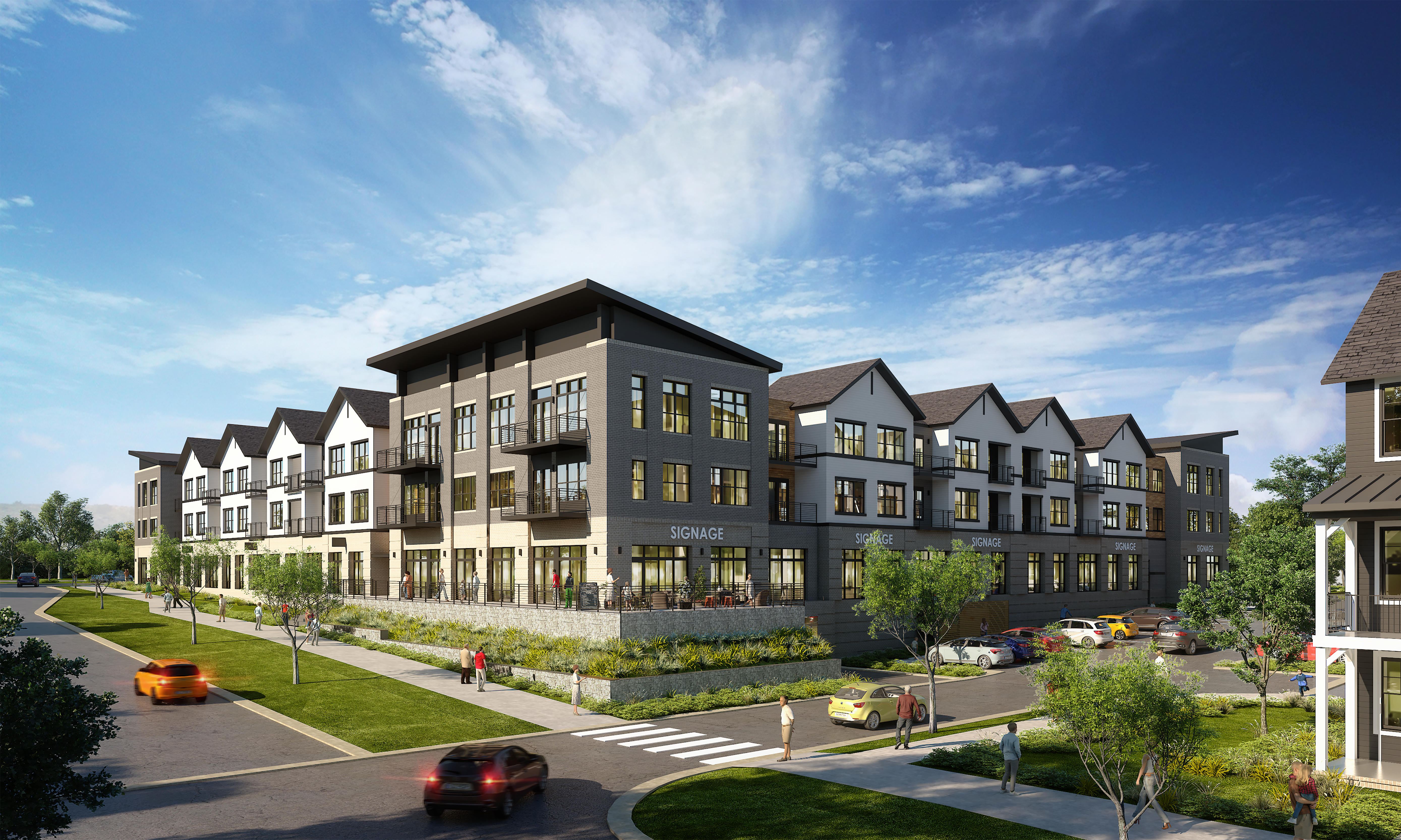
When Old Town Companies set out to develop the North End project in Carmel, Indiana, they faced a challenge that Kansas developers encounter every day: a community-serving, mixed-use project that needed creative financing to be economically feasible. The solution came through Tax Increment Financing and Hageman Capital’s ability to purchase TIF bonds and deliver upfront capital. For Kansas municipal leaders now working with the state’s new Taxpayer Agreement Act (HB 2737), this case study shows exactly how developer-backed TIF transforms a project from infeasible to operational.
The North End Project: What Was Built
North End is a mixed-use development in Carmel, Indiana, featuring 168 high-end apartments (including 40 units serving individuals with intellectual and developmental disabilities), plus office and retail space. Old Town Companies served as the developer, and the City of Carmel provided support through TIF revenues backed by the real estate development. The project addressed a real community need — housing, commercial space, and affordable units — in an area with limited development along the Monon Trail.
Mission-driven housing is rarely profitable on its own. The financial gap between total project cost and what private financing could cover required a public incentive to bridge. TIF provided that bridge without spending a dollar of public money.
How TIF Made It Work
Old Town was financing through a Freddie Mac program requiring municipal incentives, affordable unit set-asides, and rigorous underwriting. The TIF provided the incentive component, but Old Town needed to monetize the bond upfront — receiving cash at loan closing rather than waiting years for increment to accumulate. Hageman Capital purchased the TIF bonds, delivering the equity required to close the construction loan. The project closed in December 2021 and is now complete, generating long-term tax base growth for Carmel.
What Kansas Municipal Leaders Should Take Away
The North End project demonstrates principles that apply directly to Kansas’s TIF framework. First, TIF makes projects feasible that would not otherwise proceed — satisfying the “but-for” test Kansas requires through its mandatory feasibility study. Second, developer-backed TIF bonds shift risk away from the municipality. Third, the ability to sell the bond to a capital provider transforms TIF from a long-term revenue stream into immediate construction capital.
Kansas’s Taxpayer Agreement Act strengthens this model further. The developer’s contractual guarantee is now enforceable as delinquent real estate taxes — the strongest collection mechanism available. The conduit bond structure ensures the city has no obligation to advance funds. Combined with Kansas’s multi-revenue-stream TIF framework (ad valorem, sales tax, and franchise fees), developer-backed TIF Bonds under HB 2737 offer Kansas cities the most robust incentive structure in the region.
The Types of Projects Kansas TIF Can Support
Kansas TIF is available in blighted areas, conservation areas (where 50% or more of structures are 35 years or older), enterprise zones, and areas with buildings 65 years or older. TIF proceeds fund public infrastructure and site preparation — land acquisition, demolition, utilities, streets, parking structures, and environmental remediation. The critical limitation: Kansas TIF cannot fund construction of privately owned buildings. The North End model — where TIF supports the public infrastructure enabling private development — aligns perfectly with Kansas’s eligible cost framework.
Hageman Capital: Your TIF Partner at No Cost
Hageman Capital purchases developer-backed TIF Bonds and serves as a free resource for Kansas municipal leaders. Whether you have a project in your pipeline or want to understand how HB 2737 applies to your community, our team is available to help. Connect with our team to start the conversation.
TIF Bond Resources for Kansas Leaders
Explore how developer-backed TIF Bonds work for your specific role.
For Mayors
How TIF Bonds help you grow your community with confidence.
For Economic Development Directors
Close more deals with a new incentive structure.
For City Council Members
Understand TIF so you can vote — and explain your vote.
For Municipal Finance Advisors
Evaluate developer-backed TIF Bonds with institutional rigor.